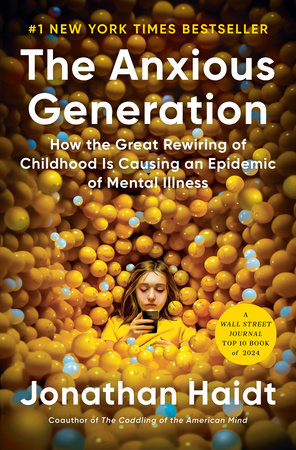
Jonathan Haidt spent years building the case that the sudden spike in adolescent depression, anxiety, and self-harm that began around 2012 is causally linked to the mass adoption of smartphones and social media. The Anxious Generation is where that case lands: methodical, data-heavy, and — once you’ve read it — very hard to set aside.
The argument is not that technology is bad but that the shift happened too fast, too young, and without the friction that older forms of social interaction naturally provided. Haidt draws on developmental psychology to explain why the phone-based childhood is structurally different from what came before, and why play-based childhood, with its boredom and conflict and unsupervised time, is the environment human adolescence was shaped by.
The second half is practical: what parents, schools, and phone companies should actually do. Some of it is naive about institutional change, and critics have pushed back on the directness of the causal claims. But those disputes are worth having, and The Anxious Generation is the most coherent framework available for having them.
This is the kind of book that tends to get dismissed as alarmist and then quietly vindicated over a decade. Read it now.